Easy To Grow Houseplants For 2025

With the arrival of summer, our schedules often fill up, leaving us with less time at home. Longer days and pleasant weather mean that we naturally want to spend more time outdoors. Because of this shift in routine, certain aspects of home care may be overlooked. These resilient plant varieties require minimal effort, allowing you to enjoy greenery in your home without the constant need for care. Easy-to-grow houseplants are ideal for beginning or busy gardeners since they require less care. Low maintenance houseplants that do well in low light areas of your home include pothos, hoyas, philodendrons, ferns and sansevierias. These indoor plants are well known for their air-cleaning ability since they remove toxins from the air and give off healthy oxygen.

Aeonium arboreum ‘Velour’
Aeonium arboreum ‘Velour’ thrives in bright, indirect sunlight and well-drained soil. Water sparingly, allowing the soil to dry out between waterings, especially during dormancy in summer. These succulents can tolerate temperatures as low as 40°F but not prolonged freezing. They can tolerate full sun but should be protected from intense afternoon sun, especially during summer. In the spring and fall, water more thoroughly after a period of dryness, mimicking the natural rainfall patterns. A mix of traditional succulent soil, perlite, and sand is recommended. Avoid using heavy, clayey soils that retain moisture.
Golden Zebra Fern | Coniogramme emeiensis
The Golden Zebra Fern, scientifically known as Coniogramme emeiensis, thrives with consistent moisture, bright indirect light, and a humid environment. Bright, indirect light is ideal. Avoid direct sunlight, which can scorch the leaves. Keep the soil consistently moist, but not waterlogged. Water thoroughly when the top inch of soil feels dry. Ferns generally prefer higher humidity, so consider placing the plant on a pebble tray with water or misting it regularly. A well-draining soil mix that retains some moisture is best. Fertilize every 4-6 weeks with a balanced fertilizer. Average household temperatures (18-27°C) are generally suitable.


Boston Fern
Boston fern, also known as sword fern, is a popular fern species that grows in many tropical areas around the world. In North America, it is considered a classic houseplant and is easy to care for, as it doesn’t require a lot of sunlight and can live on for years. It also purifies the air and increases humidity in a room. Its sword-shaped, blue-green foliage contains tiny leaflets and grows erect, arching only when fronds grow larger, which can reach 4 feet long and 6 inches wide. Like several other fern species, Boston fern grows quickly when young and becomes more of a slow-grower as it matures. It is best planted outdoors in the fall or spring or indoors year-round.
Cactus Mammillaria | ernestii albispina
Mammillaria ernestii albispina is a captivating cactus known for its tall, cylindrical stems and dense covering of white spines. The cactus features numerous small, rounded tubercles, each adorned with fine white radial spines and longer, darker central spines, giving it a bristly, textured appearance. The striking contrast between the white and brownish spines adds to its visual appeal. Mammillaria ernestii albispina produces small pink or red flowers that bloom in a crown-like ring around the top of the plant, providing a cheerful burst of color. This cactus is low-maintenance and thrives in bright, indirect sunlight. It prefers well-draining soil and requires minimal watering.

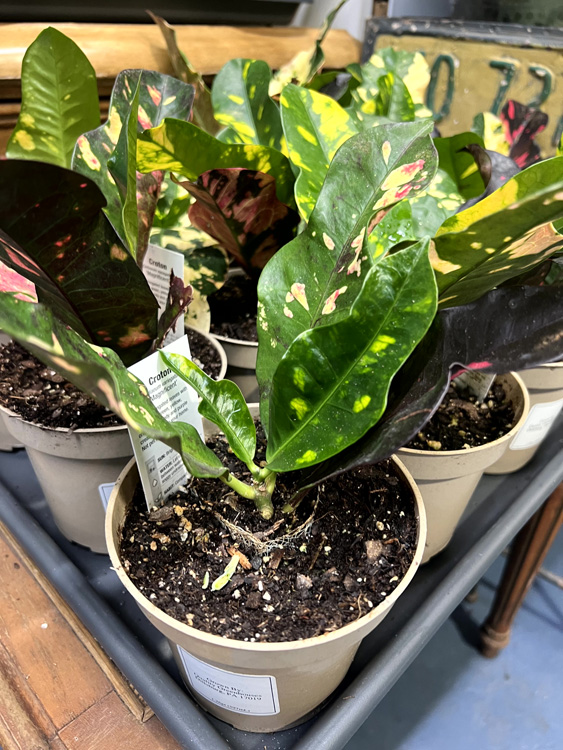
Croton Magnificient
They’re called crazy crotons for a reason, and the magnificents ‘crazy’ colors are no exception! The Croton Magnificent is known for its vibrant foliage, leaf shape, color patterns, and growth habit. Magnificent features oval, green leaves splashed with shades of soft yellow, pink, peach, and orange. Magnificent has a wider range of colors including soft yellow, pink, peach, and orange. Magnificent prefers some afternoon shade, especially in hot-summer areas. Magnificent can grow up to 6 feet tall and wide. For the best results, fertilize your magnificent three times per year. Once in early spring, at the early summer, and early fall.
Donkey’s tail | Sedum morganianum
Donkey’s tail is a popular succulent with rows of fleshy, tear-drop-shaped leaves that are blue-green. They are most commonly grown as potted plants, often suspended as hanging specimens. Indoors, the succulent can be planted and very easily propagated year-round by stem cuttings or laying a dropped leaf on top of soil, while outdoors it does best planted in early spring. Red or pink flowers can emerge in late summer, though the plant rarely blooms indoors. The donkey tail plant is safe and considered not toxic to people or pets. Like most succulents, they do well if left slightly neglected—if you forget to water them once or twice, they’ll still be just fine.


Mammillaria elongata – Ladyfinger Cactus
A native to Mexico, this small yet unique succulent belongs to the Cactaceae family and grows up to 8 inches in height. It develops dense clusters of cylindrical stems that bear brown-yellow spines. The winter-dormant cactus owns its common name because of its attractive finger-like stems that are long and narrow in appearance. Additionally, it blooms in pink to yellow-colored flowers throughout the spring season. Ladyfinger cactus has multiple common names, namely Gold Lace Cactus, Golden Stars, and Lady Fingers. Mammillaria elongata should be grown in well-drained soil or a rich cactus potting mix.
Peacock plant | Calathea makoyana
Peacock plant care primarily involves maintaining high humidity, keeping the soil consistently moist but not waterlogged, and providing bright, indirect light. Peacock plants (Calathea makoyana) are sensitive to low humidity, so increasing humidity is crucial for their health. Provide bright, indirect light. Avoid direct sunlight, which can scorch the leaves. A location near a window with filtered light is ideal. Keep the soil consistently moist but not waterlogged. Allow the top inch or two of soil to dry out before watering again. Use soft water, like rainwater, instead of hard tap water. Protect the plant from drafts and sudden temperature fluctuations.


Peperomia obtusifolia | Rubber Plant
Peperomia obtusifolia is a compact, low-maintenance, tropical plant grown mostly for its glossy, spoon-shaped, fleshy, dark green or variegated foliage. It occasionally blooms nondescript, small, whitish-green flowers. Peperomia obtusifolia grows best in low-light or indirect bright light, in loose, moist soil, and thrives in high humidity. Choose an indoor spot for your baby rubber plant with bright but indirect light. Place a non-variegated baby rubber plant in low light where the temperature remains between 65°F to 75°F . Avoid overwatering because baby rubber plants do not like soggy, wet conditions. Fertilize monthly during the growing season.
Pilea Peperomioides – Chinese Money Plant
The Pilea peperomioides) is a low-maintenance, air-purifying option that’s also pet-safe. Also called the Chinese Money Plant, Pancake Plant or UFO Plant, the Pilea is known for its circular leaves attached to a long petiole. Prefers to be in bright indirect light, but can also thrive in low to medium light and from all direction. Like most plants, the light intensity can vary the growth rate and shape of the plant. Water when the soil is about 90% dry. I also use filtered or distilled water, to prevent the leaves from browning or getting pores as this plant is very sensitive to the chemicals in tap water. Potting Mixture: Equal parts of regular potting soil and cacti soil is perfect for the Pilea.


Tradescantia zebrina | zebra plant
The tradescantia ‘Zebrina’, also known as the wandering jew, is a popular houseplant that’s loved for its striking foliage and speedy growth. It’s a great choice for all types of plant parents, as it’s relatively forgiving and requires minimal care. It only needs a little water, so let the soil dry out between waterings. Give your tradescantia plenty of bright, indirect light. An extra spritz with a mister every few days will give them a humidity boost. This plant will be trailing happily from your shelves in no time. The tradescantia ‘Zebrina’ will thrive in bright, indirect light. Place your plant in a spot that receives filtered light.
White Barrel Cactus | Echinocactus grusonii albispinus
A stunning perennial, evergreen cactus that’s bound to leave you in awe! With its ribbed and light green primary plant hue, this cactus ball is an absolute showstopper. This globular stem grows up to 35 inches in length as it matures, and the spines turn brown in full sun. Native to Mexico this ball cactus will bloom in the summer and produce bright yellow flowers when they receive enough sunlight. It grows best in warm conditions, typically indoors, and its active growth period is usually late spring and fall. During summer, water the plant but avoid overwatering. Keep it dry in winter. Use a well-drained soil mix with specialized cactus potting soil, to keep it healthy.

Shop Local & Shop Goffle Brook For All Your Gardening Needs