Houseplants – How When and Why To Clean Them
Just because it’s cold and snowy outside now doesn’t mean gardening is over for the year. One of the tasks that occupy my time now is cleaning all my houseplants. I tend to believe that clean houseplants are happy houseplants, A clean plant can breathe better and sure does look better also. Cleaning them is simple and can be done naturally with very little effort, is extremely relaxing, and puts me in a better mood every time I do so, and it is time well spent as it’s a very good way to check on your plant’s health. There is a diverse selection of indoor plants of every size, shape, foliage and color to keep you both busy and satisfied during the winter season.

How To Clean Houseplant Leaves
When you buy houseplants they often arrive from the big box store or grocery store, and eventually to you, with a layer of grime or ‘crud’ on their leaves. This is could be due to pesticide spraying, perhaps the use of foliage cleaners, and/or condensation dripping from the ceiling, misting, and most notably, from the use of hard water. Hard water is high in minerals, and just like it can leave spots on your glassware, it can leave white residue on your plant’s leaves.
It is essential to remove the buildup of dust and dirt off that has built up on your plant’s foliage so that your plants can breathe better. The leaves of houseplants need to respire, and a heavy build-up of dust can impede the plant’s ability to do so, as well as block light absorption. An example of which is shown below…
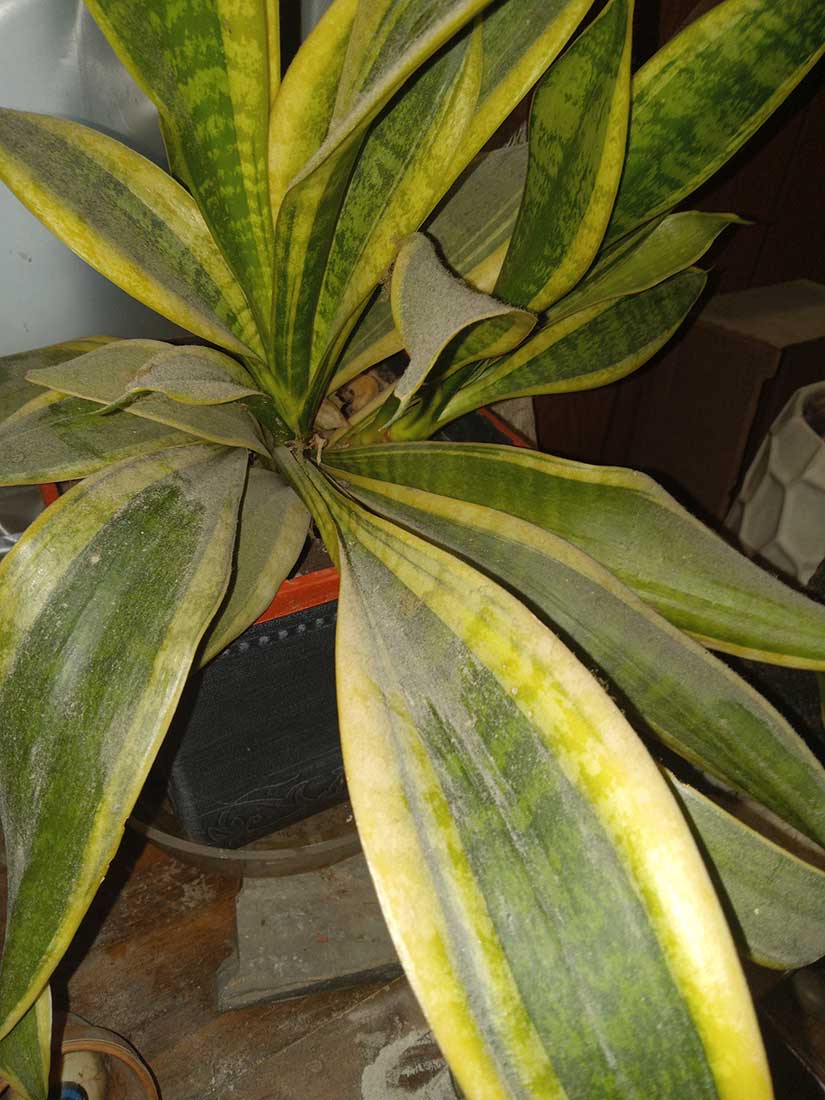
Dust Covered Foliage

Water Wiped Foliage
Example of Simple Cleaning of Foliage With Water
Why Clean Leaves Matter for Photosynthesis
- Sunlight Absorption: Leaves act like solar panels; dust acts as a barrier, preventing adequate sunlight from reaching the chlorophyll, which is essential for photosynthesis.
- Energy Production: Without enough light, the plant can’t efficiently produce the sugars (food) it needs for energy, leading to stressed, weak growth.
- Respiration & Gas Exchange: Dust clogs stomata (tiny leaf pores), hindering the intake of carbon dioxide (CO2) and release of oxygen (O2), vital for the plant’s “breathing”
Also, If your indoor plants have ever had pest infestations, you may need to remove that residue left behind. Sucking insects like mealybugs, scale, aphids, and whiteflies secrete a sticky substance that can stain the leaves. You’ll also need to want wipe that off, as well as any eggs that might remain. Be sure to discard the cloth you used in case any eggs have survived. Pests can spread like crazy to other houseplants in no time.
Common sense dictates that a clean plant is a healthy plant. By taking the time to clean them you are given the opportunity to get to know each of your plants and spot any damage, pests and other issues before they become a more extensive problems. And that is my favorite reason for cleaning my houseplants foliage
What To Use For Cleaning Houseplants
For most houseplants use a spray bottle or misting bottle. Fill a spray bottle with lukewarm water and mist the leaves thoroughly.bnYou can add a few drops of mild dish soap for stubborn dirt, but always be sure to rinse well afterward. Allow the leaves to air dry or wipe with a soft cloth. Also, when your are cleaning houseplants with a spray bottle, make sure to use distilled or filtered water to prevent mineral deposits from accumulating on the leaves.
If your plants have hardy, shiny leaves wipe them gently wipe on both the sides with a soft, damp cloth. Avoid rough cloths as they can scratch the foliage and try not to pull or bend any of the leaves.
If you prefer, another option is to clean houseplants without water is by using a can of spray air, which works great for removing dust or other buildup from fuzzy leaves like those such as African Violet or Begonias. Spray air is also an effective method for removing dust and debris trapped between cacti spines and other succulents..When cleaning plants with woolly leaves, use a soft-bristled make-up brush to dust each leaf.
Houseplants bring the vibrant colors of outdoors indoors by growing houseplants with red, orange, yellow, and bronze foliage, such as Crotons, Rex Begonias, and Peacock Plants (calathea makoyana). Complement these colorful plants with warm-toned terracotta pots, natural elements like pinecones, gourds, and garden knick-knacks on windowsills and tables and throughout your home to create a cozy garden aesthetic in your home.