Five Native Perennial Pollinators
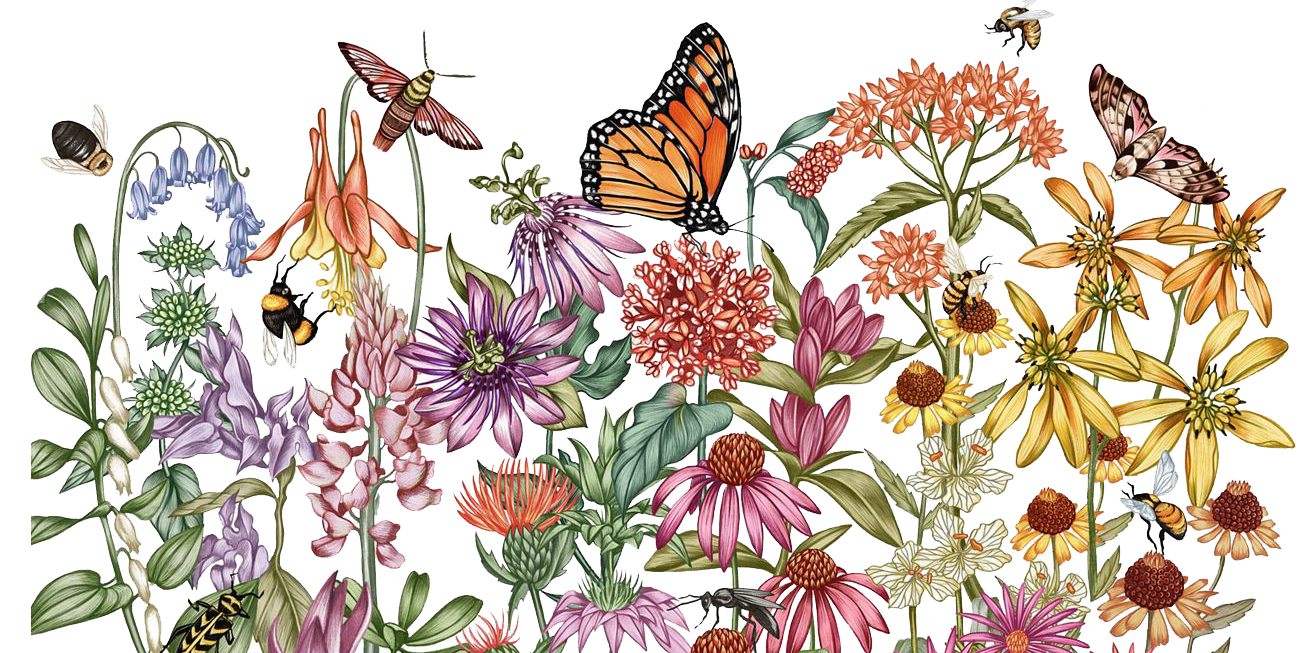
For Mid Summer Through Early Fall Color
Every year as summer winds down, we feel a familiar sense of disappointment as we prepare ourselves for cooler weather and a less vibrant color palette in the garden. But don’t despair! Fall holds its own special kind of magic, and we have some great suggestions for adding color to your late-summer garden.
For vibrant late summer to early fall color, consider incorporating plants like asters, black-eyed susans (Rudbeckia), chelome (turtlehead) and helianthus into your garden. Asters offer a wide array of colors and bloom late into the season, while rudbeckias attract pollinators with their daisy-like flowers. Helianthus works well in back or middle of the perennial beds and borders and blooms with multitudes of sunny yellow flowers. Chelome “hot lips” with its lustrous deep green foliage adds contrast and puts on quite a show with rose-pink flowers on dense terminal spikes which perk up the garden beds. All of them are of immense value to wildlife as they are pollinator plants for bees, butterflies, and other beneficial insects.
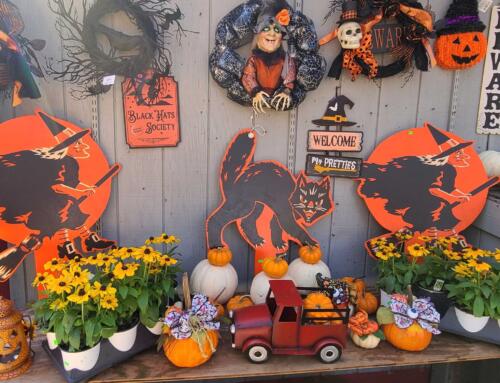
As a good rule of thumb, it’s wise to keep in mind the typical fall colors—yellow, red, and orange—and choose décor in a complementary color. For example, red pairs nicely with green, yellow with purple, and orange with blue. Here are some creative and colorful décor ideas to help get you started:


- Full Sun
- 36″ to 48″ tall
- 24″ to 36″ width
- July/Sept Bloom
- Color Pink/Purple
- Drought Tolerant
- Pollinator Plant
- Good for Cutting
- Border Plant
- Attracts Songbirds
- Foliage Green

One of the last asters to bloom in the fall, this super tall variety has purple and blue flowers high above large tobacco-like leaves. Spreads by rhizomes and seed. Large leaves (to 2′) emerge in the spring and provide a bold backdrop for earlier blooming perennials. In the fall, numerous flower stalks rise to 4 or 5 feet and each is covered with 1″ sky blue daisy-like flowers. Flowering is later than many other asters and this species often provides brilliant color until frost. Great at the back of the border along with rudbeckias and helianthus. Prefers full sun to light shade and average, well-drained soils. Tolerates poor soils and is very drought tolerant. It is a host plant for the larvae of the Black swallowtail (Papilio polyxenes) butterfly. Even though it is tall it only needs to be staked if it is grown in loose, moist, fertile soils. If the aggressively growing rhizomes become too large you can divide the root ball every three to four years.


- Full Sun
- 24″ to 48″ tall
- 18″ to 30″ width
- July/Sept Bloom
- Color Rose/Pink
- Drought Tolerant
- Pollinator Plant
- Good for Cutting

Often called “turtlehead” Chelome blooms in late summer with turtlehead shaped, hot pink flowers. ‘Hot Lips’ has deeper pink flowers than the species. The foliage emerges with a bronze tint before turning lustrous deep, dark green. It thrives in rich, moist soil in light shade but is surprisingly drought tolerant once established. Use woodland gardens, waters edge and in the perennial bed. Late season nectar source for butterflies and hummingbirds. It grows 2-3′ tall and is an excellent choice for growing in containers. This deer-resistant plant stays stunning without much fuss. For best results, plant in full sun with consistent moisture. It’s an excellent choice for edging, container gardening, and enhancing wet meadows, adding charm wherever it grows. The dark green foliage of Chelone lyonii Hot Lips provides a perfect contrast to its rosy blooms.


- Full Sun
- 36″ to 48″ tall
- 24″ to 36″ width
- July/Sept Bloom
- Color Bright Yellow
- Drought Tolerant
- Pollinator Plant
- Good for Cutting

A Perennial Sunflower that comes back year after year, Suncatcher Helianthus, brings multitudes of sunny yellow flowers. Its charming flowers are held high on strong stems from summer well into October. It works well in back or middle of the perennial border, in naturalized areas and in cut flower gardens. Helianthus Suncatcher looks stunning in containers framing doors and on the patio. It attracts birds, bees, and is a butterfly favorite. Deer and rabbit resistant. Plant in full sun, at least 6 hours of sun a day. Amend soil with compost or other organic matter.


- Full Sun
- 24″ to 36″ tall
- 20″ to 36″ width
- July/Sept Bloom
- Color Bright Yellow
- Drought Tolerant
- Pollinator Plant

Golden-yellow flowers with black centers bloom from mid-summer to fall. With its refined foliage texture, habit, and flowering performance, Rudbeckia fulgida ‘American Gold Rush’ explodes in a gorgeous bright, yellow-gold flowers from July to September. American Gold Rush can be divided every 4 years in spring. As a bonus it is much more disease resistant during humid, hot summers than other varieties of Rudbeckia. Thrives in average, well-drained soil. Water deeply, regularly during the first growing season to establish an extensive root system. Once established, reduce frequency; tolerates mild drought.


- Full Sun
- 24″ to 36″ tall
- 20″ to 24″ width
- July/Sept Bloom
- Color Bright Yellow
- Drought Tolerant
- Pollinator Plant
- Host Plant for Many Beneficial Insects
- Deer Resistant

(Rudbeckia fulgida v. deamii) is an outstanding wildflower that blooms in mid-summer with a profusion of large, golden flower petals surrounding a black center cone. Easy to grow and vigorous, it is considered the best of the seed-grown coneflowers because of its toughness, huge quantities of flowers, and sturdy, upright habit. A wonderful plant for woodland and full sun gardens, it provides food and habitat for pollinators and birds. Rudbeckia deamii is a low maintenance and resilient wildflower. Butterflies flock to the blooms and songbirds relish the seeds of this long blooming black-eyed-susan.
AVAILABLE AT THE GARDEN CENTER